Thursday, October 24, 2013

Harry S. Truman Dam and Reservoir – A Case History of Problems in Fish and Wildlife Coordination, Rollin D. Sparrowe

Click on this link to read the entire paper: Truman-Dam-Case-History-Sparrowe-v2


Reprinted from: Transaction of the 42nd North American Wildlife and Natural Resources Conference, 1977. Published by the Wildlife Management Institute, Washington, DC


This is an excellent summary of the hazards to wildlife that were anticipated for the Harry S. Truman Dam & Reservoir. Dr. Sparrowe also touches on the project’s impact on archaeological and paleontological sites, the controversial pump-storage unit and the ridiculous exaggeration of recreational benefits that accompanied the replacement of 248 miles of free flowing stream with a flat water reservoir. Dr. Sparrowe laments the long standing disregard the Army Corps of Engineers has had for regulations and laws that mandate consideration of and mitigation for fish, wildlife and cultural losses from dam projects. The lawsuit by EDF (Environmental Defense Fund) did produce a massive Environmental Impact Statement (EIS) which ultimately had no effect on the construction or operation of Harry S. Truman Dam and Reservoir. As Sparrowe said:


Even under duress of litigation, with repeated careful inputs from agency experts and other citizens, all the years of planning have had little effect on the project, or on prospects for significant mitigation. In a 1973 letter responding to the Final EIS, MDC (Missouri Department of Conservation) acknowledged the so-far unsuccessful attempts to solve the paddlefish and Schell-Osage problems, but concluded that the EIS presents a “lack of commitment to proceed with the evaluation and implementation of procedures and measures necessary to adequately mitigate other fish and wildlife losses.” Likewise, the FWS (Fish and Wildlife Service) review of the 1973 Final EIS concluded that lengthy, extensive efforts at coordination between conservation agencies and the Corps of Engineers to reduce adverse environmental effects of the project have been “essentially a fruitless exercise.”


It clearly appears that agency interactions regarding the HST project under the Fish and Wildlife Coordination Act have been unsuccessful in providing equal consideration of fish and wildlife values. After 17 years of attempts at coordination and detailed NEPA review, no modifications have been made in plans for project implementation in order to alleviate potential impacts on fish and wildlife resources.


Truman-Dam-Case-History-Sparrowe-v2


sparrowe


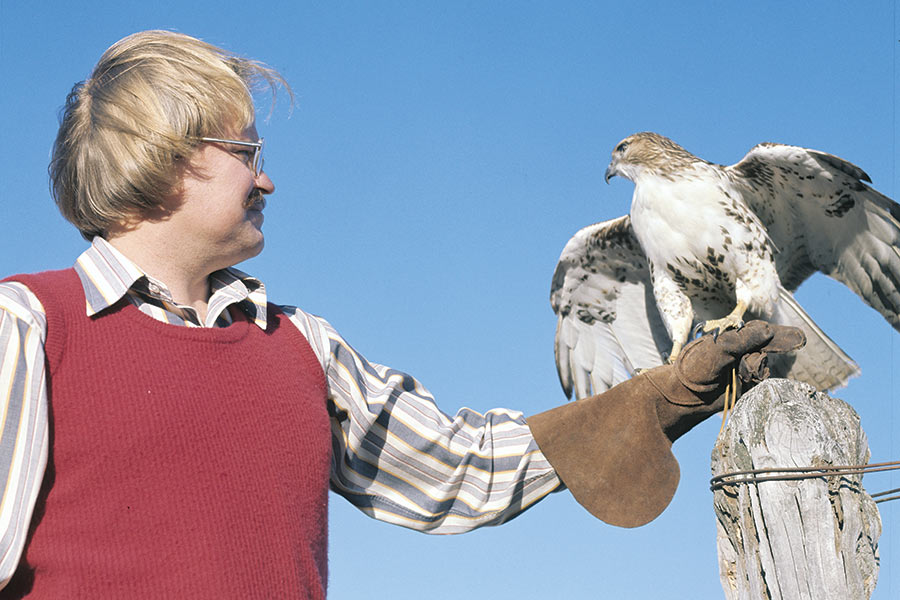
Rollie Sparrowe, PhD, was employed by the Wildlife Research Unit of the U.S. Fish and Wildlife Service at the University of Missouri/Columbia during the time of the Truman Dam lawsuit.  He was active in the Missouri chapter of the Wildlife Society, an organization that was a plaintiff in the EDF lawsuit challenging Truman Dam. (Leland Payton photograph, 1972)


Harry S. Truman Dam and Reservoir – A Case History of Problems in Fish and Wildlife Coordination, Rollin D. Sparrowe

Wednesday, September 4, 2013

John Jospeh Hogan and the cost to build a log church in the Irish Wilderness

One of the revealing documents we found in our search for information on the Irish Wilderness was a small, pocket-size account book belonging to John Hogan. He kept records in this little notebook of expenses incurred and work accomplished in 1858 and 1859, the years of the building of the settlement in the Ozarks. The telling details of daily transactions - hiring a settler to cut timber, buying supplies at the store (coffee, tea and ague medicine), the cost of a yoke of oxen ($40) - these bring life and breath to the image of life on that pre-Civil War Ozarks frontier. (pages 48 and 49 in Mystery of the Irish Wilderness)

-->
Paid for Church
100 feet plank                        $17.00
2000 boards at 62 per hun       12.40
1000 D_lost by five                   6.20
hauling lumber 4 day at 2          8.00
hauling Shingles 1 day              2.00
D logs for floor 1                       2.00
D logs for buildings 3                6.00
4 days notching 126 1/2             5.06
1/2 day hewing                             .65
Man roofing 4 days                    4.00
400 feet plank                             4.00
hauling same                               2.00
Building fireplace                       3.50
Nails & hardware                        5.00
Calicos Candlestick & _______ 5.50
Altar linens                                 2.00
                                                $85.31
We think the little log church was built in area near these two trees in Oregon County.

So - the cost of a log church in the pre-Civil War Ozarks was $85.31.  But how to pay for it? Another page details accounts "Rec'd for the Church" which add up to $75.45, leaving a deficit of just $9.86 - a sum many clergy might envy when it comes to church building.

Hogan built more churches during his career:  the little church at Chillicothe, whose stained glass windows were shattered by anti-Catholic night riders - "gentlemen of grips and signs" - who "belabored with sticks and guns the artistic little gems..."; a cathedral for St. Joseph, Missouri, more lavish than he wanted by urging of his most influential parishioner; and the Cathedral of the Immaculate Conception in Kansas City (first services in 1883) with its now-gold-plated dome. 

In On the Mission in Missouri, Hogan mentions other churches he helped build across north Missouri, but often he doesn't mention their names. One small church built in 1865, however, he does describe:  St. Bridget's church at Peabody (later called Lingo), Missouri, "a small neat, convenient frame church was built, at a cost of about eight hundred dollars, which was subscribed and paid without delay. ... I loved the little building for its name, its devotional seclusion, and the piety of the people who attended it.

Tuesday, August 20, 2013

Artesian White Sulphur Spring Well Park, Clinton, Missouri

Artesian Spring

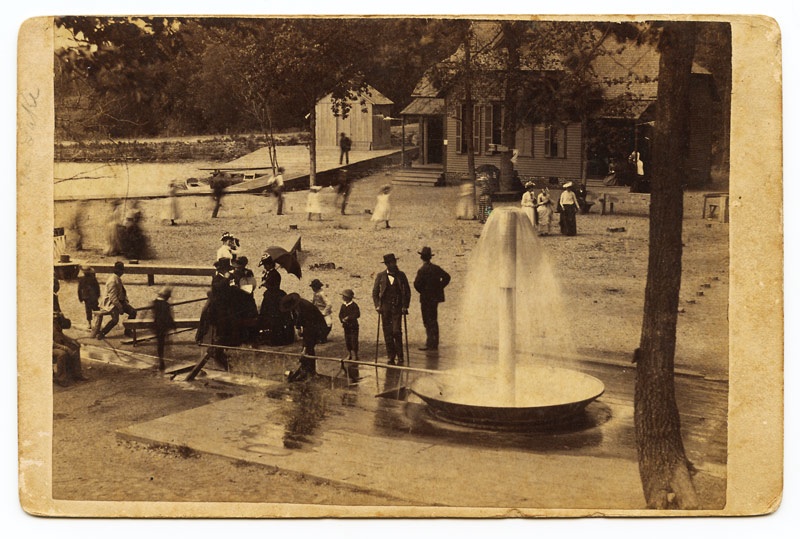
Cabinet card, circa 1890

Established in 1887, in the era when spring water was associated with health, the Artesian Spring Well on the western edge of Clinton was a lively place. The Artesian Hotel catered to visiting spa enthusiasts. A race track was built and for several years the county fair was  held here. Excursion trains, public buggies, carriages, and trolleys brought visitors to sample the curative, but malodorous, waters with their purgative effect on those who drank it.  Besides the spring, which shot a fountain of water nearly 12 feet high, and lake, entertainments included a dance hall, county fairgrounds and horse racing.

The Encyclopedia of Missouri – Towns and Counties (1901) described the park:

One and one-half miles southwest of Clinton, at the terminus of a horse-car line, are the beautiful grounds of the Artesian Park, containing a spacious lake, with hotel of three stories, basement, and attic, equipped with all modern conveniences, including dancing hall, billiard rooms and bowling alley, a pavilion, and boat and bath houses. The artesian well on the grounds discharges a palatable water, possessing known medicinal qualities, containing the chlorides of potassium, sodium, magnesium, and calcium,, the carbonates of magnesium and calcium,, sulphate of calcium, and sulhydric gas. The park is a favorite resort, and attracts visitors from considerable distances.

The fountain spray subsided. Rumors circulated that a couple of local wags had dropped bowling balls into it, but more likely that the spring just lost pressure and thus its artesian effect.

The original site comprised 40 acres. The bottomland area of the park became part of the Harry S. Truman Dam project.  Today the site of the former artesian spring is overgrown. Elsewhere on the remaining grounds are playgrounds, tennis courts, and the Artesian Amphitheater, built in 2002 by Hilton Hotels Random Acts of Service.


Artesian White Sulphur Spring Well Park, Clinton, Missouri

Sunday, August 11, 2013

Mystery Priest on Missouri Highway 19

The story of a "mystery priest" who prayed with an accident victim on Missouri Highway 19 hit the wires Friday (8/9). CNN, USA Today and myriad news outlets carried the account of a priest who appeared at the scene of a terrible accident, prayed with and anointed the accident victim, assured the first responders that their equipment would now be able to cut her free and then disappeared.  He didn't show up in the 70 or so photographs of the accident scene. Most likely it was a case of being in the right place at the right time, and then going on his way.  On the other hand - they say he had an Irish accent and north Missouri was the main missionary territory of Father John Hogan 150 years ago ... before he founded the settlement in the area now called Irish Wilderness......hmmmmm....

Wednesday, July 24, 2013

DAMMING THE OSAGE wins in two categories of ForeWord Reviews’ 15th annual Book of the Year Awards

ForeWord Reviews’ 15th annual Book of the Year Awards, judged by a select group of librarians and booksellers from around the country, were announced at the American Libraries Association Annual conference.

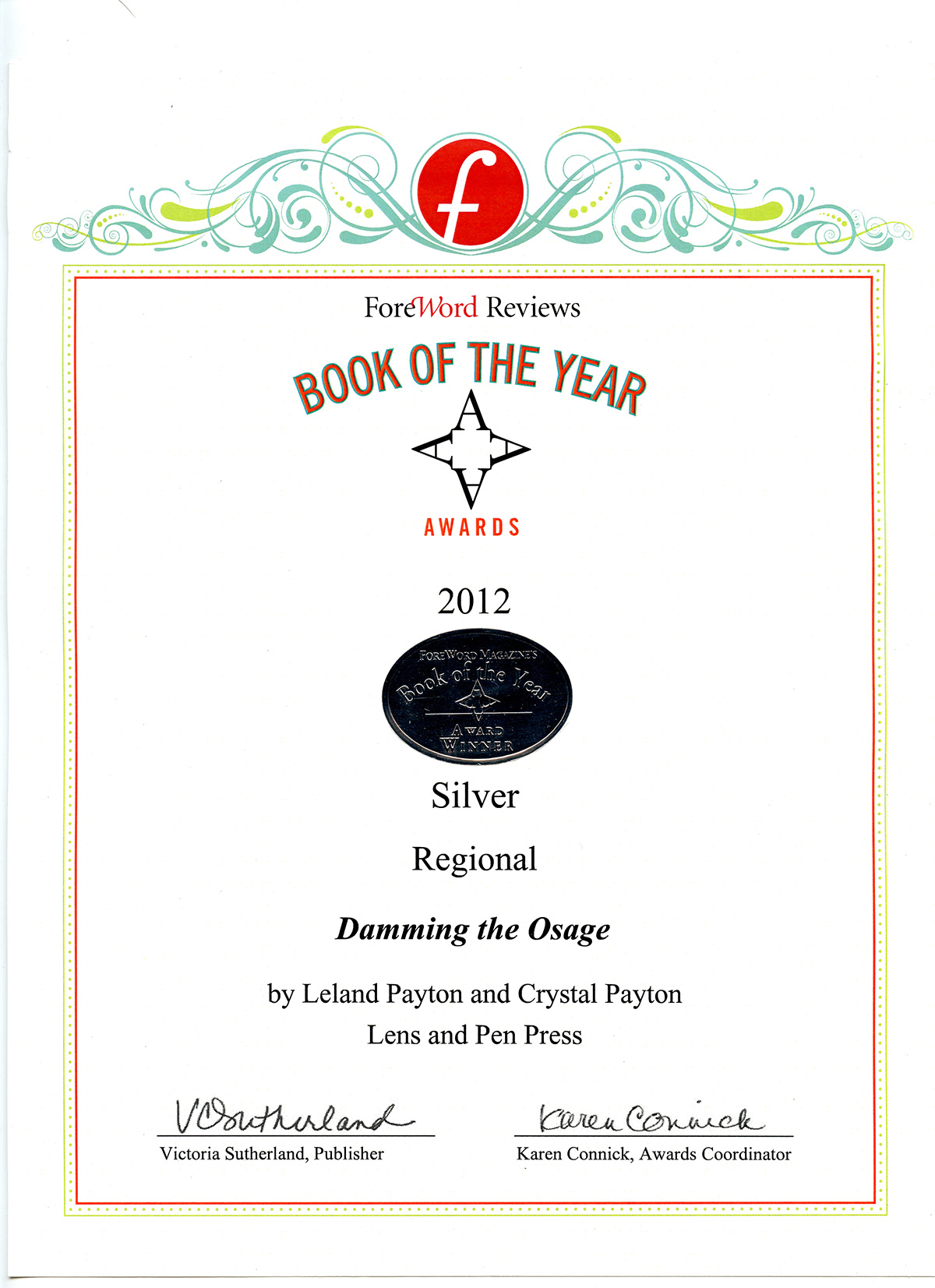
Damming the Osage: The Conflicted Story of Lake of the Ozarks and Truman Reservoir received two awards: silver in Regional Non-Fiction and bronze in the Ecology and the Environment category.foreword-award-large

With 1,300 entries from more than 600 publishers, 248 winners were selected in 62 categories.

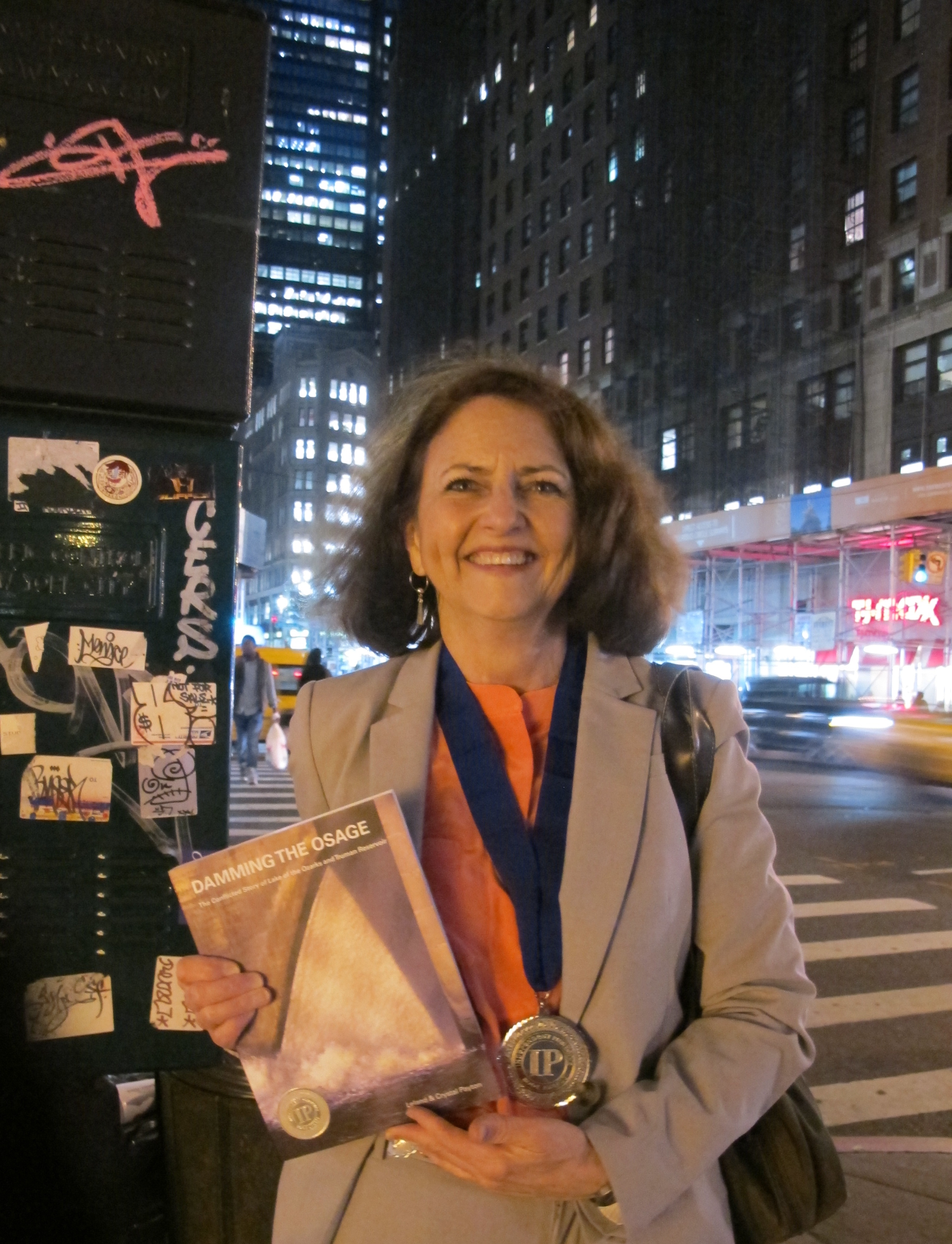
Damming the Osage also won a silver medal in the Independent Publishers Books Awards (IPPY), Best Regional Non Fiction category.   Lens & Pen’s Crystal Payton received the award in New York City. The title continues to pull in positive reviews and comments on blogs and Web sites.

ForeWord Reviews, a quarterly print journal dedicated to reviewing independently published books, was established in 1998 to provide booksellers, librarians, agents, and publishing professionals with reviews of the best titles from small, alternative, and academic presses.


DAMMING THE OSAGE wins in two categories of ForeWord Reviews’ 15th annual Book of the Year Awards

Monday, July 8, 2013

Review of Damming the Osage in St. Louis Post Dispatch


This weekend the St. Louis Post Dispatch published a review of Damming the Osage. Written by Steve Weigenstein, author of Slant of Light, a historical novel set in the Civil War,  “Tangled History of Osage River” (find it here) is a concise, but encompassing, description.  When the reviewer really ‘gets’ what we are trying to do and the way we did it – it is rewarding!  I especially liked his final paragraph:


Like the Osage itself, this book meanders. Those desiring a more compact, straightforward narrative — a channelized book, so to speak — will be disappointed. But those willing to follow its twists and turns will find, like a river floater, surprises and pleasures around every bend.


After the review was published orders came in to amazon.com and they sold out of stock.  We’re hoping they reorder soon.  Of course, it’s still available through our Web site!


Review of Damming the Osage in St. Louis Post Dispatch

Friday, June 7, 2013

DAMMING THE OSAGE receives medal at 17th IPPY awards in New York

IMG_5941


It was a warm, humid late spring evening in New York City for the 17th annual Independent Publisher Book Awards. A festive crowd gathered for the ceremony, emceed by Jim Barnes. Crystal Payton, co-author of Damming the Osage represented Lens & Pen Press, picking up the silver medal for regional non-fiction, Mid-West.


IPPY-ATL_2419-2013-DTO


Crystal Payton with IPPY spokesperson Trey Gerrald


Award winning books covered a broad range of topics from the Royal Cavalry of Oman to poetry and pop-up books to – of course – the story of a prairie stream and the people who live on and with it. University presses, independent publishers, e-book producers and photographers brought a rich assortment of interests and entertainments to the event. Entries came from every U. S. state and several countries. This year the IPB received more than 5,300 entries, of which 382 received medals.


While not all medalists were able to attend the ceremony, all three winners in the non-fiction, Midwest region were there.


IPPY-award-2-1-DTO


Crystal Payton/Damming the Osage; Noppadol Paothong, photographer/Save the Last Dance (written by Joel Vance);

and Glen Ediger/Leave No Threshing Stone Unturned


DAMMING THE OSAGE receives medal at 17th IPPY awards in New York