Wednesday, February 18, 2015

JOHN HOGAN’S THIRD RECON TRIP TO THE OZARKS – January to March 1858

--> -->
Chapter 7 of Hogan’s memoir, On the Mission in Missouri 1857-1868, begins with the account of his third exploratory trip to the Ozarks. A different priest friend accompanied him this time, Father William Walsh of St. Peter’s parish in Jefferson City. As they rode the rails and by horseback, their conversation undoubtedly ranged wide. Two young priests, both born in 1829, from County Limerick searched the American frontier for land suitable for Irish immigrants fleeing their troubled homeland.  Those were not their only ties. Like Hogan, Walsh studied at the seminary at Carondelet and was ordained (1854) by Archbishop Kenrick in St. Louis.
This  wintery exploratory trip was longer than the first two. It appears that Hogan met Father Walsh in St. Louis in mid to late January. From there they headed south at the end of the month. Parish records from Chillicothe indicate the Hogan was absent from January 7 to March 13. 
(from On the Mission in Missouri, 1857-1868)

FATHER WALSH THE EMIGRANT'S FRIEND
REV. William Walsh, the devoted zealous pastor of St. Peter's church, Jefferson City, ever a loving faithful friend of the emigrant, took the greatest possible interest in every effort made to lead the good Catholic Irish people from the railroad shanties and the back streets and cellars of the cities, to locate them on lands. With this purpose in view, he offered to accompany me on my next journey into southern Missouri, so that having knowledge of the country and of the progress of the undertaking in which I was interested, he could aid me, if in his power, to do so.

We set out from St. Louis together in the last days of January, 1858. Traveling on the Iron Mountain Railroad to its southern terminus, then somewhere in Washington County, we thence proceeded on horseback, following somewhat, but diverging more southerly from, the route taken by Reverend Father Fox and myself a short time previous. At Van Buren we found a Canadian named Ronge, a Catholic, whose three children I baptized. Going eastward from there we crossed the Black River at its junction with Brushy Creek. Reverend Father Walsh when crossing the river, although keeping his feet raised as high as possible along the horse’s sides, still could not keep them entirely out of the water, which was deep and very cold, it being freezing weather at the time. The result was bad for the dear Reverend Father. The only change of clothing which we had was a pair of socks, which he put on instead of the wet ones. These did not save him. The cold wet boots and the wet frozen clothing brought on a chill, which was soon followed by coughing, and fever. Next, the flushed face and the short, difficult breathing with other symptoms of pneumonia, came on apace.

We diverged from our intended course and made by the shortest way for Greenville, the county seat of Wayne County, where we hoped to find some kind of hotel accommodation. For some days the dear Reverend Father lay in danger of death, in a poor uncomfortable tavern, and under the care of an unskilful physician. Soon, however, he began to recover and by degrees grew better so as to be past all danger, for which merciful favor I was most grateful to Almighty God. During his convalescence I made a journey to Jackson in Cape Girardeau County, to employ an agent near the Land Office there, to transact business for the settlers. Returned to Greenville, I was glad to find my dear reverend friend in much better health and courage than when I had left him. We again set out together and rode by easy stages towards the Iron Mountain and Potosi, thence homeward by rail to St. Louis; he going to Jefferson City and I to Chillicothe.
Father Walsh survived the illness and the “unskillful physician.” His cash contribution for the construction of the log church in Oregon County is noted in Hogan’s small account book. He continued as pastor at St. Peter's in Jefferson City until January 1863, when he became pastor of St. Bridget’s parish in St. Louis., where he served for 35 years. He died there in December 15, 1898.
The archives of the Archdiocese of St. Louis have a file of papers to and about Father Walsh.  In the file are several letters over the years from Bishop Hogan. An article about him in the 1920 Reunion book of St. Bridget’s Parish notes he was a defender of the poor and enemy of the dance halls. The article recounts a story of Father Walsh scattering revelers at a “Kerry Patch’ dance hall one Saturday night. They note: “not a hand was raised against the giant priest.”

Mystery of the Irish Wilderness is now $16.95 (regularly $18.95), postpaid.
 
On the Mission in Missouri and Fifty Years Ago: A Memoir ,which contains full text of both of Hogan's personal memoirs as well as additional biographical information, is now $18.95 (regularly $24.95), postpaid.

Saturday, February 14, 2015

FAREWELL TO FATHER JAMES FOX, February 14, 1879

-->

Pasted in one of Hogan’s little scrapbooks, in the archives of the Diocese of Kansas City – St. Joseph, a yellowed newspaper clipping has Father Fox’s obituary.  He died February 14, 1879. Unfortunately, Hogan did not note the publication name.

Shared characteristics of the two Irish prelates come through in this accounting – fiscal responsibility and near-abhorrence of debt; dedication; plain spoken clarity of thought and word. Hogan and Fox were both frontier priests, ordained by Archbishop Kenrick, dedicated to the promise of America for the poor, the hopeful and the ambitious. They built churches, established schools and cleared debt

A brief biography was included in Father Fox’s obituary:

Obituary: The Rev. James Fox
Sketch of his life and labors – His last sickness – the funeral arrangements – services tomorrow.
The death of another well-known Catholic priest, in the person of Rev. James Fox of St. Patrick’s parish, which occurred yesterday, will occasion emotions of no ordinary depth among many persons who enjoyed no intimate acquaintance with the deceased, but had heard of his labors. The loss of him will be especially felt in the parish to which he had devoted the last years of his life, and for which he had done so much, and there will be abundant manifestations of the profound sorrow, which his decease has caused amongst his parishioners.
SKETCH OF HIS LIFE
Father Fox was born in the county of Wicklow, Ireland, in 1820, and his college days were spent at the Carlow institution, which is one of the highest in that country and to which no one who is not very proficient in his studies is admitted. He had as a fellow student Bishop Ryan, and both made great progress at the college. In 1849 he emigrated to the United States and on St. Peter and Paul’s day—the 29th of June of that year—was ordained a priest by the Most Rev. Peter Richard Kenrick in this city. After his ordination he remained six month here in various capacities and was then transferred to Potosi, Washington County to take charge of the church there. He remained there one year and was next appointed successor of Father Cotter of Old Mines, in the same county.
At that time the country was in the condition of all newly opened territory, and the labors which devolved upon him were unusually arduous. His mission extended through Washington and into Jefferson, Iron, St. Francois and Crawford counties, he giving personal supervision to other churches than his own. He lived, or had his residence, at Old Mines eighteen years. It has been said that he lived on horseback, so large a portion of his time was he away from his home. He built the Old Mines, Irondale, Potosi and DeSoto churches, and was largely assisted in his work by Bishop Hogan of St. Joseph and Father Hays of this city, who had charge of the churches established by him. While at Old Mines, in 1868, he was appointed successor of Father Cavanaugh as pastor of Assumption church, St. Louis. He was eighteen or nineteen months at the Assumption and then in May,
… Father Wheeler, at Munich. While at the Assumption his zeal had found fitting employment in clearing off the debt of the church and in bringing the Sisters of St. Joseph from Carondelet to a convent in the parish. He was especially attached to children, and finding on his accession to the pastorate of St. Patrick’s that there were 2,500 or 3,000 of them in the parish without the opportunities for Catholic education, he at once actively interested himself in procuring the needed facilities and the result was the erection of St. Patrick’s school, which is considered the finest school in the city, public or private, and the finest parochial school in the United States. The school and ground cost upwards of $90,000. He looked upon it as his crowning effort, and sickness alone prevented him from witnessing the school in operation. His last words from the altar, the last time he officiated at the church, nearly six weeks ago, were that the school would be open for the children on the morrow. The morrow came, but it found him on a sick bed.
In connection with his labors at St. Patrick’s parish, it may be stated that he was successful in paying off a debt of $24,000, which there was on the church
CHARACTERISTICS OF THE DECEASED
Father Fox was not an orator, and in the pulpit he devoted less attention to doctrinal points than to practical every day advice. He was a plain but forcible speaker and what he said acquired additional force from the zeal with which he was filled and which made itself manifest in all that he did. He was a very earnest worker; years ago he was the embodiment of the pioneer spirit; disregarded fatigue, and bore up under circumstances which would have overwhelmed many stronger men. In St. Patrick's parish he gave his whole energies to his work, and went from door to door urging his parishioners to a more faithful performance of their duties. His charities were uncircumscribed.
His health had always been frail, and it was kept so by his forgetting himself in his work. Some six weeks ago he was attacked with typhoid pleurisy, and his system, as it were, collapsed. It is thought that there were some evidences of consumption, which had been induced by exposure in all kinds of weather. The best of medical advice was obtained for him, and two of the Alexian brothers waited constantly upon him during the past month. He died with perfect resignation shortly after six o'clock yesterday morning. His confessor was Father Tschieter, S.J., of St. Joseph's church and the blessed sacrament was administered by Father Hays.

Friday, February 6, 2015

JOHN HOGAN AND JAMES FOX, FRONTIER PRIESTS AND LIFELONG FRIENDS


John Hogan, priest and bishop, and Father James Fox remained lifelong friends.  Father Fox continued his support of Hogan’s Ozarks settlement, sending cash and donating property. Hogan kept close accounting of the costs of building the wilderness settlement in a small pocket notebook, which rests now in the archives of the Archdiocese of St. Louis.  
 Hogan noted contributions for the construction of a log church in his Ozarks settlement.  Father Fox was most generous ($17.00)- especially when you consider that the actual cash cost for the log church in the wilderness came to $85.31 for material and labor.
 In addition to his cash contribution, Fox donated land for the church site. 
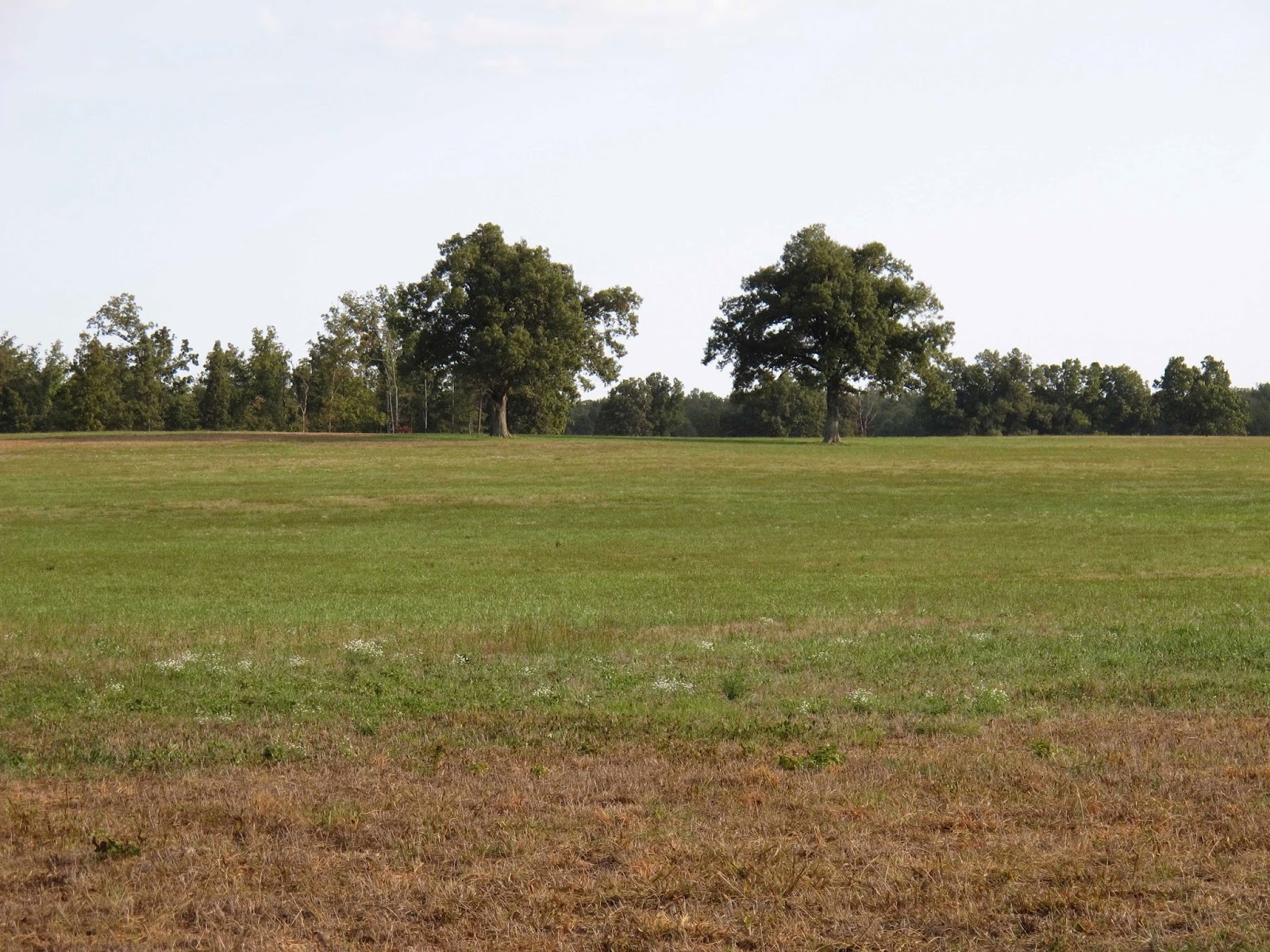
“Fox was issued a land patent on September 1, 1859 for 320 acres in Oregon County. The Irish pastor of Old Mines and Potosi donated it for the colony’s use. On this site, a forty-foot square log chapel and priest’s quarters were built by Father Hogan. On May 17, 1879, the property was sold for back taxes. For a long time, the outline of the church’s stone foundation was a visitable feature in “the priest’s field.” Through the years, the rocks have been appropriated for other building uses or removed to facilitate plowing. It is today a fescue pasture."
 
Mystery of the Irish Wilderness is now $16.95 (regularly $18.95), postpaid.
 
On the Mission in Missouri and Fifty Years Ago: A Memoir ,which contains full text of both of Hogan's personal memoirs as well as additional biographical information, is now $18.95 (regularly $24.95), postpaid.


Friday, December 26, 2014

John Hogan arrives in St. Louis, Dec. 26th 1848

After two full months' journey from County Limerick, John Joseph Hogan arrived in St. Louis the day after Christmas, 1848. The final leg of the trip, by the steamboat Big Missouri up the Mississippi River, was dangerous enough with the ice flows of winter. More concerning though were the several passengers and crew who died of cholera and were buried on shore where they died. 

As he had in New Orleans after reaching the docks, Hogan stopped first at church to thank God for his safe arrival. Hogan had a specific purpose in coming to St. Louis and he knew this church:
ST. LOUIS
Working on steadily through the ice, stopping occasionally for repairs, maintaining doggedly the purpose to make port, we reached the wharf at St. Louis about noon, December 26th, in eight days from New Orleans, the distance by water being 1,278 miles. Average rate of sailing per day, 160 miles; average speed per hour, 6.1 miles; the same speed nearly that was maintained by the Berlin crossing the ocean. Like a good, God-fearing sailor, I went first of all to the nearest church, the Cathedral of St. Louis, to make my thanksgiving to God for my safe arrival at my place of destination, after having passed through many dangers and hardships.

Next morning, December 27th, feast of St. John the Evangelist, I went to confession, heard mass, and received Holy Communion in the Cathedral of St. Louis.

 Basilica of St. Louis, King, 1951
I had learned from many reliable sources of information that in the far-away Western World, on the banks of the Mississippi, a great diocese was growing up that had immense missionary fields, over which the Church was spreading rapidly. One of my sources of information, the “American Catholic Almanac,” sent regularly every year to my father by his brother, my uncle and namesake in America, gave full description of the diocese of St. Louis and had a well-executed frontispiece engraving of the Cathedral of St. Louis and buildings adjoining it, so that I had become greatly familiar with the place.
 
The Old Cathedral, St. Louis, 2009 (C. Payton photo)

Saturday, November 15, 2014

November 15, 1857 - FATHER HOGAN'S SECOND EXPLORATORY TRIP TO THE OZARKS

-->
This time Hogan's companion on the trail was his mentor and dear friend, Father James Fox, pastor of St. Joachim's church in Old Mines. Hogan was apparently excited by the settlement opportunities he had seen on his first swing through the eastern Ozarks. According to parish records, he returned to Chillicothe October 15 and a month later (Nov. 15) he was headed south once again to ride deeper into the much more affordable real estate of the Ozarks.

Father Fox, a native of County Wicklow, Ireland, shared Hogan’s concern for the waves of arriving poor immigrants who could not afford to establish themselves in this new land, with land or homes or businesses. For three weeks they rode through southeast Missouri.  That they both came from rural backgrounds, with knowledge of agriculture and the kind of land needed to support a farming operation was an invaluable asset in their evaluation of the terrain.


MY DEAR FRIEND FATHER FOX
 Arrived at Chillicothe, I corresponded without delay, with my dear friend and worthy brother priest, Rev. James Fox, rector of St. Joachim's church, Old Mines, Missouri, who as I well knew, was deeply concerned for the matter of land ownership and occupancy by Catholic emigrants. The incidents of my late journey, which I related to him, so interested him that he requested to be permitted to accompany me on another such journey, if I should have occasion to make one. I wrote to him to be ready and that I would soon call on him.

        Before many days, and in the latter part of November, we set out together on horseback from Old Mines. Traveling by way of Caledonia and Edgehill, we passed through Centerville the county seat of Reynolds County. Thence entering Shannon County, we descended Blair Creek, remarkable for its alternate limestone and red porphyry hills. Afterwards, we crossed the Current River at the mouth of Jack's Fork,


The Jack's Fork River (on left) flows into the Current. Close to this spot, Hogan and Fox forded the Current in 1857 on their November trip to explore possible sites for a settlement in the Ozarks

thence to Eminence, thence to Birch Tree, thence to Thomasville, thence to Pike Creek, thence to Van Buren, thence to Ten Mile Creek, thence to Black River, thence by way of Otter Creek, McKenzie Creek and Big Creek, through Caledonia and Potosi, homeward. Reynolds County we found entirely unfit for settlement, not one tenth of the land being tillable. Shannon and Oregon counties had much tillable land, perhaps one-third of the whole area, but none of it of prime quality except the river alluvial bottoms. Everywhere through these two last named counties, there was good stock range and abundance of valuable pine forest.

Thomasville in Oregon County is situated in this broad alluvial valley along the Eleven Point River.  

Both Hogan and Fox brought to bear their complete grasp of agricultural and industrial technologies and supremely practical analysis of the opportunities and limitations available.  Hogan definitely intended this settlement to succeed.

SPECIAL PRICES: Mystery of the Irish Wilderness is now $16.95 (regularly $18.95), postpaid: and On the Mission in Missouri and Fifty Years Ago: A Memoir is $18.95 (regularly $24.95), postpaid.


Thursday, November 13, 2014

AN IRISH-AMERICAN ODYSSEY by Colum Kenny – New book profiles Irish family’s rise

-->
Last year Colum Kenny, a professor of communications at Dublin City University, contacted us after finding Mystery of the Irish Wilderness, our account of John Hogan’s Ozarks settlement.   We very much appreciated his comment,  Your Hogan edition and your book on the Ozarks are the kind of thing that maintain one's faith in culture and learning.”
Professor Kenny was researching and writing a book about the O’Shaughnessy family who had been parishioners of Father John Joseph Hogan in his north Missouri missionary days.  Of course, we shared our images of Bishop Hogan for illustrations in his book, An Irish-American Odyssey: The Remarkable Rise of the O’Shaughnessy Brothers.
Kenny’s book is now out, published by the University of Missouri Press.
This  exhaustive account of the lives and careers of these sons of Ireland is a fascinating read. Naturally we were particularly intrigued by the intersection of the lives of John Joseph Hogan and those of James O’Shaughnessy and his wife, Catherine Mulholland, daughter of the railroad contractor, James Mulholland.  
On his first exploratory trip to north Missouri, Hogan recounts (On the Mission in Missouri, 1857-1868) his mediation efforts between the construction crews of Mulholland and another contractor named Murphy in Chapter One.
Through Hogan’s frontier years, he was the O’Shaughnessy’s family pastor, marrying, baptizing their children and counseling and praying with them. James and Catherine lived their lives in north Missouri and St. Joseph. Their sons were educated at Notre Dame and eventually made their professional careers in Chicago.
Hogan’s descriptions of the people he met and ministered to paint real life portraits. But until now, we had only Hogan’s accounts.  It was tantalizing to wonder what became of those early settlers, when their and Hogan's paths diverged. It’s not often though that those paths came back together like this – especially in the histories of ordinary people (who are not presidents, kings or generals).  
Tying the priest and family back together is Professor Kenny’s grandfather – Kevin J. Kenny, founder of Ireland’s earliest full-service advertising agency, who met James O’Shaughnessy several times in Dublin in the 1920s. That meeting, the shared professional interests of Kenny and O'Shaughnessy, spurred Professor Kenny into the research leading to this intriguing volume.

AN IRISH-AMERICAN ODYSSEY: The Remarkable Rise of the O’Shaughnessy Brothers is available on amazon.com

Below is the review I posted on amazon. 
 AN IRISH-AMERICAN ODYSSEY: The Remarkable Rise of the O’Shaughnessy Brothers, Colum Kenny. University of Missouri Press, 2014.
Dublin City University Professor of Communications Colum Kenny has written an in-depth, remarkably detailed account of the immigration, assimilation and prospering of a “potato famine” Irish family – the O’Shaughnessy’s of Newhall, Kiltartan, County Galway.
James Shaughnessy and his brothers, Thomas and John, left the famine and poverty that was mid nineteenth century Ireland to seek a better life in the United States. From their east coast landing, they moved west, eventually settling in north Missouri. There James married, raised a family and eventually became a small businessman in St. Joseph, Missouri. James and Catherine had five sons, two of whom gained national and even international reputations in their chosen professions, and three daughters.
Author Kenny has interwoven the stories of the O’Shaughnessy sons with a wealth of detail of contemporaneous history, politics, and the social and cultural landscape in which this family struggled, achieved and made its mark.  Often he goes from the particular event in the family experience to the larger context of the times – for example, a description of the family’s farm and holdings in north Missouri is followed by a discussion of the concentration of most Irish immigrants in eastern urban settings.
Two of the brothers, Francis and John became respected Chicago attorneys. James O’Shaughnessy started his career as a journalist – among other assignments, writing dispatches from Cuba during the Spanish American War for the Chicago Chronicle – then found his calling in advertising. He became an influential leader in the advertising business, founding and guiding the American Association of Advertising Agencies (known as the 4As) from its inception. James and Francis played important roles in the founding of Chicago’s Irish Fellowship Club, which figured prominently in the social and political life of that city for decades.
Thomas O’Shaughnessy was a stained glass artist, inspired by the Book of Kells and Art Nouveau.  His masterpiece work is still lauded today: The fifteen stained glass windows of Old St. Patrick’s church in Chicago. An Internet search for images of St. Patrick’s will bring up richly colored pictures of these elegant fenestrations.
This is also the story of how advertising became an industry of its own – not the motley assortment of ad hoc practitioners that were the norm at the turn of the last century. This story of the first real generation of Mad Men describes a world of advertising much different from the complex multi-platformed juggernaut we are familiar with today.  James O’Shaughnessy’s passionate belief in the power of advertising to advance civilization reaches what the author describes as “rhapsodic hyperbole,” prompting Kenny to wonder if he’d kissed the Blarney Stone. 
In 1924 Jim O’Shaughnessy toured Dublin with a delegation of American ad men who were attending an international advertising conference in England. They were hosted by the Publicity Club of Ireland.  Among those greeting the visitors was Kevin J. Kenny, grandfather of the author, Professor Kenny, a meeting that in a sense prompted this project. 
In weaving the achievements of the O’Shaughnnessy Brothers into the intricate fabric of the much larger forces of their times and places, Colum Kenny has created a fascinating and informative book.

Saturday, November 8, 2014

1848 - November 8 - JOHN HOGAN SAILS FROM LIVERPOOL FOR AMERICA

Having set St. Louis as his goal and destination, John Hogan booked passage from Liverpool to New Orleans in October of 1848.  When he arrived in Liverpool from Ireland, he was unimpressed with the Forfarshire on which his passage was booked.  She was, he said, "a wide, large, dirty, heavy-looking ship" and reports he heard said she was slow. 

Sailing companies of the mid-nineteenth century had not learned - as have today's common carrier companies - the value of fees for service. Hogan's request to change his reservation was accommodated at no additional charge.  "I had no difficulty in getting a transfer to the Berlin," a clipper ship "commanded by Captain Smith, a Boston Yankee.  ...  a good ship and a fast sailor."

From Fifty Years Ago: A Memoir by John Hogan:

OFF FOR THE AZORES
Early Wednesday morning, November 8th, I was aboard the Berlin. It was not long before the sailors commenced loosening the ship’s moorings. Soon, by a hawser heaved by a capstan, the ship moved slowly towards the gate of the dock. Outside the dock, a tugboat in waiting took the ship in tow and steamed out into the harbor. In the meantime, the sailors unfurled the sails and hauled the yard-arms before the wind. At once, with sails set, the Berlin moved forward and closed up with the tug. Immediately the connecting hawser was let go from the tug and was hauled in by the ship; then, with parting salutes, the tug fell back, and the ship bounded westward towards the open sea.