Showing posts with label Mystery of the Irish Wilderness. Show all posts

Wednesday, April 26, 2017

Moving on up!


We’re moving our Lens & Pen Press blog from Blogger to Word Press and will consolidate the two current blogs into one for our books--the Beautiful and Enduring Ozarks, the James Fork of the White (coming 2017), Damming the Osage, Mystery of the Irish Wilderness and See the Ozarks--and many other favorite topics of discussion like the Ozarks or water resources.

The archive of L&P posts is still available at http://lensandpen.blogspot.com/ 

The posts on our separate Damming the Osage website remain available at http://www.dammingtheosage.com/the-blog/

--------------------------------------------------------------------------------------------------------

COMING IN 2017: JAMES FORK OF THE WHITE: Transformation of an Ozark River.
Sample pages from this new book can be seen at www.beautifulozarks.com

Our earlier ‘river book,’ DAMMING THE OSAGE, can be seen at www.dammingtheosage.com


Friday, March 17, 2017

POWER TO ST. PATRICK AND THE SHAMROCK

-->
POWER TO ST. PATRICK AND THE SHAMROCK

Bishop Rice has dispensed

Catholics in the Springfield-Cape Girardeau Diocese

from abstinence from meat

St. Patrick’s Day

FRIDAY, MARCH 17

St Patricks Day

The Springfield-Cape Girardeau Diocese encompasses the land where John Hogan established the settlement now remembered in the Irish Wilderness.  See its full history in Mystery of the Irish Wilderness.

In honor of St. Patrick and my Irish ancestors, Lens & Pen Press is offering Mystery of the Irish Wilderness ($18.95 retail) for $15, postage paid, during the month of March!  Order your copy at: http://www.dammingtheosage.com/buy-the-book/
_______________________________________________________________________

COMING IN 2017: JAMES FORK OF THE WHITE: Transformation of an Ozark River.  
Sample pages from this new book can be seen at www.beautifulozarks.com 
Our earlier 'river book,' DAMMING THE OSAGE, can be seen at www.dammingtheosage.com

Sunday, March 12, 2017

NEW IRELAND (s) - the hope of many immigrants

Young Father John Joseph Hogan was not the only Irish idealist hoping to establish communities for those he described as "people of small means." His exploratory forays into the Ozarks did result, however briefly, in the establishment and growth of a small settlement mostly in Oregon and Ripley counties.

On a Cram's 1875 Missouri map is the enigmatic toponym, New Ireland. It appears to be located near the present day site of Handy, an area that had a heavy concentration of 1859 and 1860 land patents with Irish claimants. No historical society has any documentation or record of new Ireland as a Missouri place name. 

Lynn Morrow, noted Ozarks historian, provided this opinion: "Cram's 1875 map has a number of these idiosyncratic place names ... that, like New Ireland, occur for a short time and then disappear and are not repeated by subsequent cartographers, although I (and no one else) have not systematically compared them. I don't know if there is a source that explains where Cram got all of his information, but it's certainly not all from surveys and post office records."

Chapter 20 of Tim Egan's recent best seller, The Immortal Irishman, is entitled "New Ireland."  In it he notes the American consul in Dublin, William West, in the late days of the Civil War proposed rewarding Irish solders for the Union with 'some desirable portion of our territories and call it New Ireland, of which no doubt General Meagher would in due time be elected Governor."

Thomas F. Meagher ("The Immmortal Irishman" of the title) in his post-Civil War career sought to find that 'desirable portion of our territories' for the Irish in Montana Territory. Meagher was painfully aware of the abysmal tenement conditions in which East Coast Irish families mostly lived. Hogan's pre-Civil War concern was the plight of Missouri's Irish (servant girls and railroad workers could not - by the nature of their separate employment circumstances - meet, marry and raise good Irish Catholic families).

Google the phrase, New Ireland, and other locations show up. Some have an actual community associated with it.

!!HAPPY ST. PATRICK'S DAY!!

In honor of St. Patrick and my Irish ancestors, Lens & Pen Press is offering Mystery of the Irish Wilderness ($18.95 retail) for $15, postage paid, during the month of March!  Order your copy at: http://www.dammingtheosage.com/buy-the-book/
_______________________________________________________________________

COMING IN 2017: JAMES FORK OF THE WHITE: Transformation of an Ozark River.  
Sample pages from this new book can be seen at www.beautifulozarks.com 
Our earlier 'river book,' DAMMING THE OSAGE, can be seen at www.dammingtheosage.com

Saturday, May 2, 2015

MOUNT IRISH WILDERNESS, Nevada, and new WILDERNESS IN COUNTY MAYO

Some might ask if the "Irish Wilderness" is a geographic place - or an Irish state of mind? Our book Mystery of the Irish Wilderness explored the history of a real place in the Missouri Ozarks, once populated by real Irish immigrants seeking a new life, a place now a component of the National Wilderness system.

Come to find there are other Irish Wildernesses, like Mount Irish Wilderness in Nevada's Basin and Range: "a 28,274-acre parcel less than two hours’ drive north from Las Vegas, harbors the parched region’s most precious resource: water."

And in 2013, The Irish Department of Art, Heritage and Gaeltacht and Coillte signed a Memorandum of Understanding, creating the country's first wilderness area in the Nephin Beg Range of North West Mayo.  This is a project with a twist ... the plan is to "rewild" 4,400 hectares of land to provide "a dedicated wilderness of forest, mountain, bog, river and lakes in the Nephin Beg Range." Wild Nephin is a fascinating and ambitious project, it's "the first of its kind in Western Europe."


An Taoiseach Enda Kenny TD, photographed at Néifinn Fhiáin in North Co. Mayo with from Left to Right Mr. Jimmy Deenihan, Minister for Arts, Heritage and the Gaeltacht, Dennis Strong National Parks & wildlife Services, and Bill Murphy, Head of Recreation Coillte to mark the  signing of a Memorandum of Understanding (MoU) between Coillte and the Department of Arts, Heritage and the Gaeltacht that designates 11,000 HA along the Nephin Mountain Range as Ireland’s first wilderness area. March 14, 2013
(Images released by Ken Wright Photography)

Friday, February 6, 2015

JOHN HOGAN AND JAMES FOX, FRONTIER PRIESTS AND LIFELONG FRIENDS


John Hogan, priest and bishop, and Father James Fox remained lifelong friends.  Father Fox continued his support of Hogan’s Ozarks settlement, sending cash and donating property. Hogan kept close accounting of the costs of building the wilderness settlement in a small pocket notebook, which rests now in the archives of the Archdiocese of St. Louis.  
 Hogan noted contributions for the construction of a log church in his Ozarks settlement.  Father Fox was most generous ($17.00)- especially when you consider that the actual cash cost for the log church in the wilderness came to $85.31 for material and labor.
 In addition to his cash contribution, Fox donated land for the church site. 
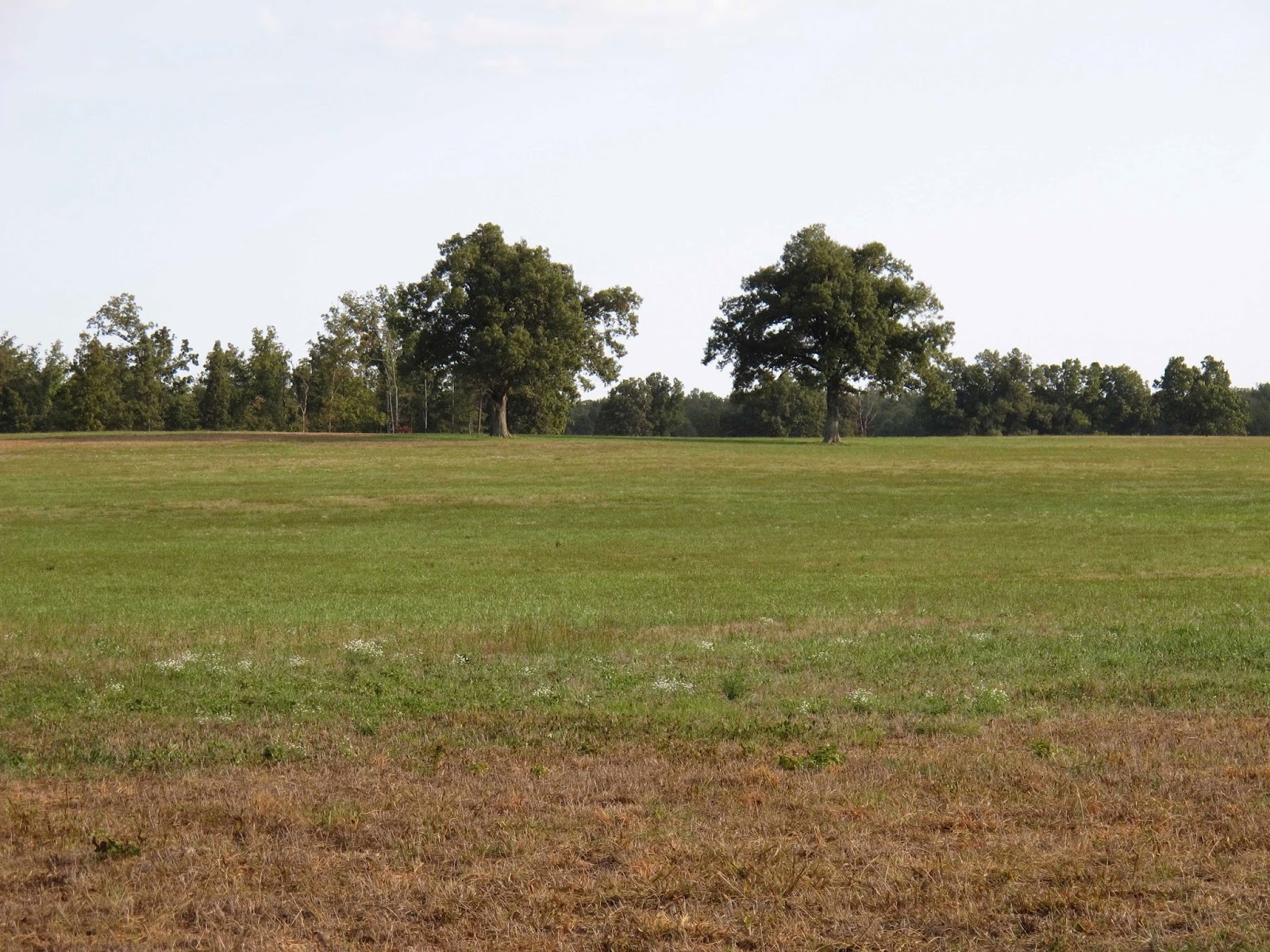
“Fox was issued a land patent on September 1, 1859 for 320 acres in Oregon County. The Irish pastor of Old Mines and Potosi donated it for the colony’s use. On this site, a forty-foot square log chapel and priest’s quarters were built by Father Hogan. On May 17, 1879, the property was sold for back taxes. For a long time, the outline of the church’s stone foundation was a visitable feature in “the priest’s field.” Through the years, the rocks have been appropriated for other building uses or removed to facilitate plowing. It is today a fescue pasture."
 
Mystery of the Irish Wilderness is now $16.95 (regularly $18.95), postpaid.
 
On the Mission in Missouri and Fifty Years Ago: A Memoir ,which contains full text of both of Hogan's personal memoirs as well as additional biographical information, is now $18.95 (regularly $24.95), postpaid.


Thursday, October 16, 2014

JOHN HOGAN'S FIRST PARISH - ST. JOACHIM CHURCH IN OLD MIINES

-->
Soon after John Hogan was ordained by Archbishop Peter Kenrick (1852), he received his first assignment – assistant to Rev. James Fox, pastor of St. Joachim’s Church in Old Mines. In Father Fox he found a mentor and lifelong friend. Young Father Hogan worked with Father Fox for more than a year, learning the strategies of a frontier priest – hours and days in the saddle, serving parishes across many counties, ministering to scattered Catholics families who were settling the state. 

Since the mid-18th century, Jesuits and other priests had served the spiritual needs of the miners and settlers, mostly French, in the area of Potosi, Richwoods and Old Mines. Tradition says that there were several log churches in this location before the present church was built. It was dedicated in 1831. The church site itself was sold to Archbishop Peter Richard Kenrick, another of Hogan's mentors, for a dollar in 1850. (Yes, the church was built before the Church owned the land. So went life on the frontier.)

Father Fox was the pastor of St. Joachim's from 1852 to 1868. During that time he enlarged the original church building. According to a history of the parish:
On November 12, 1854 the church was blessed and placed under the invocation of the Blessed Virgin Mary and St. Joseph by Rev. A. S. Paris, priest of the Cathedral Church of the Diocese of St. Louis, assisted by Rev. J. Caffrey (more on Father James Caffrey in a future post) and Rev. S. Grugan, in the presence of a large concourse of people. It was then reconsecrated by Bishop Duggan on November 15, 1857.

St. Joachim's Church today.  (page 27, Mystery of the Irish Wilderness)

Special prices on all our books now.  Click here to go to our store


Wednesday, September 3, 2014

50 YEARS AGO TODAY THE WILDERNESS ACT SIGNED INTO LAW


Fifty years ago today, on September 3, 1964, President Lyndon B. Johnson signed the Wilderness Act into law after more than sixty drafts and eight years of work. When Johnson signed the act, he made the following statement: "If future generations are to remember us with gratitude rather than contempt, we must leave them a glimpse of the world as it was in the beginning, not just after we got through with it." 


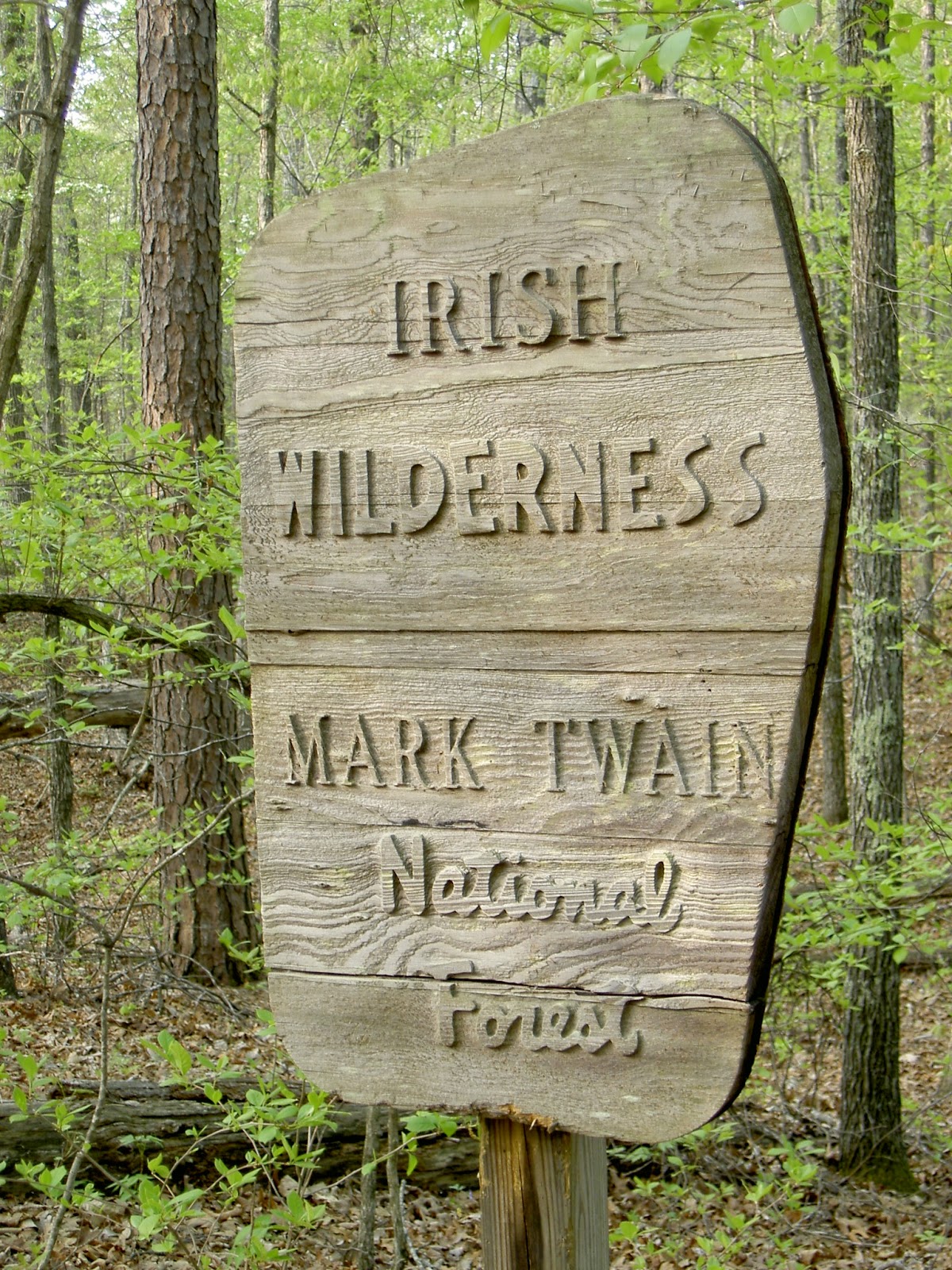
Nearly twenty years later, March 27, 1984, 16,500 acres of rugged, wooded land between the Eleven Point and Current rivers in Oregon and Ripley counties in the Missouri Ozarks were “designated as wilderness and shall be known as the Irish Wilderness.”
 

The inclusion of the area once known as Father Hogan’s Irish Settlement was not done without controversy. Mystery of the Irish Wilderness outlines the competing camps (Sierra Club and environmentalists vs. local landowners) and their arguments that supported or opposed its inclusion. 


See more photos of the Irish Wilderness on our Facebook page:

Thursday, March 6, 2014

What did Bishop John Joseph Hogan look like? CORRECTING THE RECORD


It’s time to set the record straight. A drawing of a seated, slightly slumped and rather – shall we say – out of shape-looking cleric was once identified as John Hogan by a Kansas City newspaper in the first quarter of the 20th century. 

We contend that early typesetter/caption-writer got it WRONG.  BUT the image and its egregious mis-attribution has persisted for a century.  This slumped and tired image has shown up in books and in magazine articles about the Irish Wilderness, the Irish experience in Kansas City and histories of the “churching” of Missouri. It’s time to clear that up.

Every description we’ve read describes him as tall and trim, an athletic, vigorous and fit man even late in life.  His official portraits show him sitting erect, trim and formally posed.


Photogravure portrait of Hogan from the 1889 "Illustrated History of The Catholic Church in the United States." Bishop Hogan remained a tall, slender, erect figure throughout his life. There is no mention of horseback riding in his later years (as he did during his missionary years), but his frequent five and six mile walks were duly noted by reporters.


Bishop Hogan was a favorite of reporters looking for comment on the news of the day, or just a feature story in a slow news cycle. In a 1906 profile of Hogan, The Kansas City Star noted:
In spite of his age, his tall form is erect and his eye flashes as it did fifty years ago. … Every afternoon he walks from four to six miles. He rides to the end of the car line or to some point upon it and walks back. … The bishop’s tall figure is a familiar one upon the streets. He wears always upon his walks a low-crowned, broad brimmed black felt hat, a long black coat… He walks slowly, deliberately, generally with his hands clasped in front and a meditative look upon his face.
(emphasis - underlining - added by me)


Silver anniversary cabinet card of Bishop Hogan, 1893.  (Mystery of the Irish Wilderness, page 123)


 When Hogan returned to Kansas City from his yearlong sabbatical in Ireland in 1895 a newspaper reporter described him at his arrival at Union Station:
Finally a man well advanced in years but with erect figure and eyes that flashed with pleasure as he saw the assembled host, stepped from the train.
Kansas City Journal,  Feb. 21, 1913, included this in the much longer account of the bishop on the occasion of his death:
Never was there a man more willing to give audience to the griefs of others than was Bishop Hogan. A moment after a visitor had been ushered into the big parlor of the episcopal home, with its old fashioned furniture, the large oil painting of the bishop on one wall of the room, the old books in the bookcases—the bishop would appear in the doorway and with that earnest look on his face that was so characteristic he would inquire:
          Well, my good friend?
Then he would listen to the story there was to tell or give his advice upon the many little troubles—or big ones—as the case might have been. In spite of his age, there was always that earnest expression, that tall, erect form and those eyes, flashing as they did fifty years ago.
. . .  the bishop never let business interfere with his regular afternoon walk. Then he would ride to the end of a car line and walk back—sometimes five or six miles.
With such reports and with the evidence of his official portraits, it seems most likely that the sketch so often identified as Hogan is not the Bishop himself.  So what would John Joseph Hogan himself think of this mix up? Given his self-effacing sense of humor, he would probably be amused!

Saturday, December 14, 2013

"A MOCKERY OF SUBLIME ANTICIPATIONS" - John Joseph Hogan's first glimpse of America

It was 1848 - 165 years ago today that John Joseph Hogan, an eager, 19-year-old Irishman, first set eyes on America. Having gone as far as he could in his studies in Ireland, Hogan had decided he would go to America - St. Louis specifically - to study for the priesthood. Unlike most Irish emigrants, Hogan bypassed the East Coast, instead sailing from Liverpool aboard the clipper ship Berlin bound for New Orleans. 

December 14, 1848 was a Thursday – and foggy.  Young John Hogan, from the deck of the clipper ship, scanned the horizon eagerly for his first sight of America – his destined place. Anchored in the Gulf, waiting for tugboat escorts, they were greeted by the sediment load the Mississippi River carried to the Gulf. “Shrouded in fog banks, we anchored in muddy water that as far as the eye could reach, had befouled the color of the sea.” 

After five weeks and a day at sea, they had reached the mouth of the Mississippi. Hogan’s eager expectations were dashed at the sight of the muddy mingling of Gulf and river.
To a person from the British Isles, the United States, as seen at the mouths of the Mississippi, is a mockery of sublime anticipations. No bold headlands; no high, rocky bluffs; no cities on hills; no hills at all; no heathery uplands or daisied fields leading down to the sea; no murmuring sea, for there was no ebbing or flowing tide, not enough rise of tide to cover a croaking frog; no belt of strand to mark the boundary between land and water, for land and water seemed interlocked and of the amphibious kind—an impenetrable jungle of swamps and bushes, infested with sharks, snakes, and alligators. There was water enough, of the kind it was, but who dare drink of it? Ha! That from the marshes smelt of toads and reptiles; that from the Mississippi suggested a fish trap, for, besides mud, it may have a young alligator in it. And this is America—America indeed. Alas! No help for me now; I am on the Mississippi, and must go it. This ship I am on won't stop until I get to New Orleans; and if I throw myself overboard and attempt to swim ashore, maybe the alligators or the buzzards will get me. See the miserable, muddy banks, not high enough above water for a drowning rat to dry himself on.
From Fifty Years Ago: A Memoir by John Joseph Hogan. 

Undeterred by the impenetrable jungle that made a "mockery of sublime anticipations," Hogan pressed on, arriving in New Orleans the evening of December 15.   


The entire text of Hogan's memoir, Fifty Years Ago: A Memoir,  is contained in On the Mission in Missouri & Fifty Years Ago: A Memoir. On the Mission is his own account of his years as a pioneer priest in northwest and southeast Missouri (including his founding of the Irish Wilderness), spanning the Civil War and its immediate aftermath (1857-1868).  Both memoirs are included in one volume as well as extensive biographical information gleaned in our years of research.

Postscript:  Hogan was ordained in the Archdiocese of St.Louis in 1852. He later became the first bishop of St. Joseph, Missouri (1868); and in 1880, the first bishop of Kansas City, Missouri. He died in 1913.

Tuesday, December 3, 2013

IRISH WILDERNESS TAKES SHAPE IN THE OZARKS - 1858 - 1859


November, 1858: For more than a year, John Joseph Hogan with surveyors and friends had scouted  Missouri's southeastern Ozarks for arable land, filed claims for plots through the land agents of Cape Girardeau and found immigrant Irish who would settle the land and work a farm. Near the end of November 1858 – 155 years ago – Hogan again set out for his southern colony.  This fourth trip would be his longest (11 months) sojourn in the Ozarks and the most active months of development of the settlement he envisioned.

Interestingly – and a fact not noted in most official and unofficial histories of his settlement – Hogan did not prefer the deeper Ozarks.  In 1857, on his first reconnaissance trip, he had claimed land in the area around Ellsinore and along the Little Black River (“480 acres in a body on Ten Mile Creek”) finding it more suitable for agriculture and with “improved land enough” that they would not be starting from scratch.  However when he returned in the late fall of 1858, he found his plans had been dramatically changed.
Arrived at the settlement, I found a difficulty existing. In the district of country where I had bought land the year previous, intending to make the place the center of the proposed settlement, I found that all the government land, fit for cultivation, had in the meantime been bought by parties not Catholics, so that there was no longer a possibility of owning sufficient ground there to form a colony such as I had contemplated. There was improved land enough in the neighborhood that could be bought at a reasonable price and on easy conditions. But the cry was for government land and at government price.

Westward then, though very much against my will, I had to move about forty miles, to a region of country where there was yet much vacant government land, on the confines of Ripley and Oregon counties, along the tributaries of the Current and Eleven Point rivers, about twenty miles north of the state of Arkansas.
Colton's Missouri Map of 1875 clearly locates the central point of Father Hogan's colony on the Oregon/Ripley county line about 20 miles north of Arkansas and a few miles east of the Eleven Point River.  Locations lingered on printed maps sometimes well after their demise. 

From that point on, Hogan and arriving Irish immigrants were busy shaping this growing community.  In Hogan’s classic memoir, On the Mission in Missouri, he compresses the building activities of many months into a short paragraph:

Improvements went on apace; cutting down trees, splitting, rails, burning brushwood, making fences, grubbing roots and stumps, building houses, digging wells, opening roads, breaking and ploughing land, and sowing crops. Already in the spring of 1859, there were about forty families on the newly acquired government lands, or on improved farms purchased, east and west of Current River, in the counties of Ripley and Oregon; and many more were coming …

He mentions the log chapel built on "ground bought and donated by Reverend James Fox of Old Mines, Missouri: a one story log house forty feet square … partitioned into two apartments, one for the chapel and the other for the priest’s residence."  Perhaps the chapel was built while paperwork on the tract of land was in the works. In searching land records, we found that Reverend Fox was issued a land patent on September 1, 1859 (near the end of Hogan’s sojourn in the Ozarks) for 320 acres on Oregon County, which he donated to the flourishing colony. 

In the archives of the St. Louis Archdiocese is a small account book that Father Hogan kept during his time in the Ozarks. In it we found his enumeration of the cost of his log church in the pines: $85.31 (page 48, Mystery of the Irish Wilderness)
Hogan traveled back to Chillicothe at the end of October, 1859, ending his full time presence and oversight of the colony. One more brief trip – November 17 to mid-December 1859 – to southeast Missouri was his last. Soon the Civil War made travel perilous. Demands of his expanding missionary parish in northwest Missouri increased. Hogan remained in the north, but still recalled with affection and concern the settlers he had led to area.


Postscript: Long after the settlement had been scattered by the vagaries of war, another land record tells a sad story of the Irish settlement.  On May 17, 1879, the property Father Fox had donated to the colony for the log church was sold for back taxes.